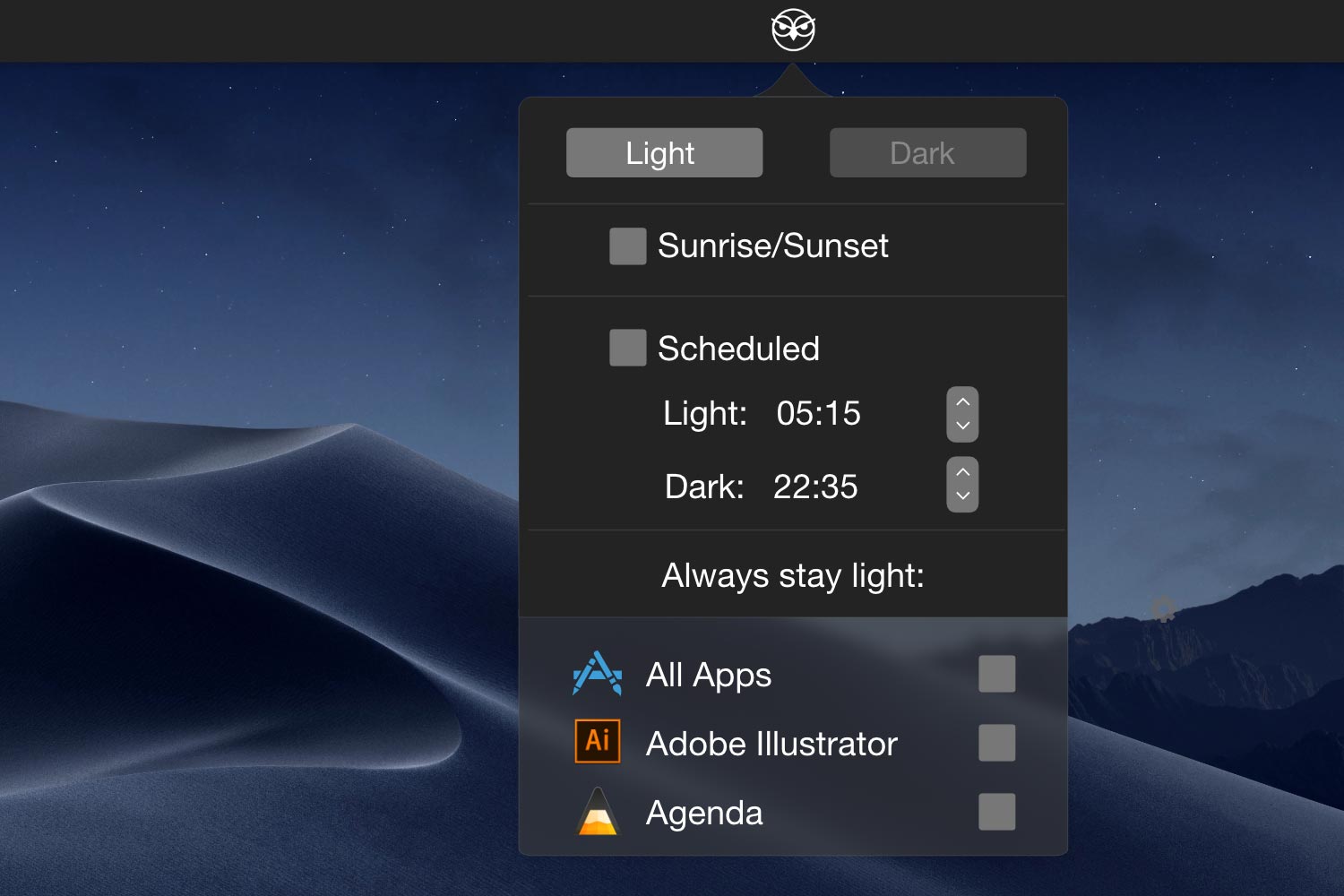
NightOwl will toggle the Dark/Light Modes based on your chosen time. You only have to set it up once, then it will run in the background.
Want your Mac to be in Dark Mode during night and switched back to Light Mode, when the sun rises? NightOwl does the work for you.
It only takes you a second to switch between Mojaves Dark/Light Modes by using the Hotkeys. Press, "Huuhuuhhh", dark. - that easy
The gameplay itself is a unique blend of exploration, puzzle-solving, and psychological introspection. Players take on the role of the protagonist, navigating through a surreal world that represents his inner turmoil. The game's mechanics are designed to evoke a sense of discomfort and unease, mirroring the protagonist's own feelings of guilt and isolation.
The genius of “Tsuma ni Damatte Sokubaikai ni Ikun ja Nakatta Game Better” is that the title itself warns you. Translating roughly to “I shouldn’t have gone to the flea market without telling my wife” + “Game Better,” it’s a mantra for healthy relationships. tsuma ni damatte sokubaikai ni ikun ja nakatta game better
Our story begins with Taro, a well-meaning but hapless husband in his mid-30s. Taro had always been a bit of a risk-taker, often dabbling in online betting and participating in friendly wagers with his colleagues. One fateful evening, while out with friends at a local izakaya, Taro got swept up in a sokubaikai. The gameplay itself is a unique blend of
Aiko would nod, eyes twinkling, and reply, “Deal. And next time, I won’t stay silent.” The genius of “Tsuma ni Damatte Sokubaikai ni
Given the confusion, I'll prepare a detailed piece that could relate to the possible intended meanings or interests:
The game's reception has been mixed, with some critics praising its bold approach to storytelling and others condemning its perceived nihilism and lack of empathy. However, it is precisely this kind of reaction that highlights the game's success in sparking important discussions about the role of gaming in modern society.
The gameplay itself is a unique blend of exploration, puzzle-solving, and psychological introspection. Players take on the role of the protagonist, navigating through a surreal world that represents his inner turmoil. The game's mechanics are designed to evoke a sense of discomfort and unease, mirroring the protagonist's own feelings of guilt and isolation.
The genius of “Tsuma ni Damatte Sokubaikai ni Ikun ja Nakatta Game Better” is that the title itself warns you. Translating roughly to “I shouldn’t have gone to the flea market without telling my wife” + “Game Better,” it’s a mantra for healthy relationships.
Our story begins with Taro, a well-meaning but hapless husband in his mid-30s. Taro had always been a bit of a risk-taker, often dabbling in online betting and participating in friendly wagers with his colleagues. One fateful evening, while out with friends at a local izakaya, Taro got swept up in a sokubaikai.
Aiko would nod, eyes twinkling, and reply, “Deal. And next time, I won’t stay silent.”
Given the confusion, I'll prepare a detailed piece that could relate to the possible intended meanings or interests:
The game's reception has been mixed, with some critics praising its bold approach to storytelling and others condemning its perceived nihilism and lack of empathy. However, it is precisely this kind of reaction that highlights the game's success in sparking important discussions about the role of gaming in modern society.
141k +
27k+
6.3M +